
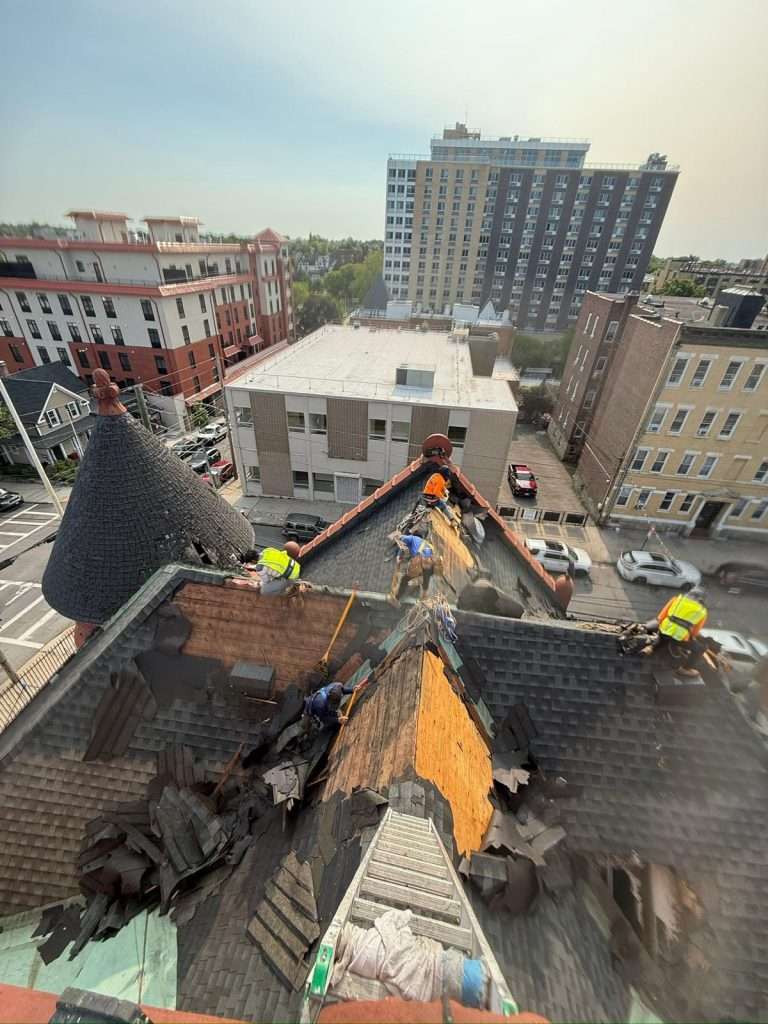
Hackensack is unusual for Bergen County — most Bergen towns have relatively uniform housing stock, but Hackensack has genuine diversity across housing generations. Victorian-era historic homes near the Green with original slate and copper. Postwar single-family stock from the 1950s–1970s across the city’s residential neighborhoods. New construction and mixed-use development on Main Street. Apartment towers downtown. Every housing generation has different structural exterior needs, and homeowner conversations about roofing, gutters, and siding play out very differently depending on which Hackensack neighborhood you’re in.
Here’s the local homeowner’s guide for roofing, gutter, and siding work in Hackensack — what’s specific to each housing generation, what to check, and how to work with Bergen County’s center. From a licensed New Jersey general contractor that runs residential structural work across Hackensack and the rest of Bergen County.
Hackensack’s Three Housing Generations
Historic Downtown (Late 1800s–Early 1900s)
Neighborhoods around the Green and the historic downtown corridor still have significant Victorian and early Colonial Revival housing stock. Roofing, gutter, and siding scope for these homes is entirely different from newer construction:
- Slate or clay tile roofs. Original slate roofs on Hackensack Victorians can last 100+ years with proper maintenance — but repair requires specialty roofers who work with historic materials.
- Copper flashing and gutters. Original copper systems still exist on some historic homes. Replacement in like-material vs. modern aluminum is a real cost and character decision.
- Wooden shake or wooden clapboard siding. Original wood siding — maintainable but requires ongoing paint/stain cycles, not swap-and-forget vinyl.
- Historic preservation considerations. Some Hackensack historic neighborhoods have district guidelines that affect what material substitutions are permitted.
Postwar Residential (1950s–1970s)
Most of Hackensack’s residential stock outside the historic downtown was built during the postwar boom — similar to Paramus in age and construction type. This generation is hitting the aging-out window on all three exterior systems:
- Original asphalt shingle roofs long since replaced; second-generation and third-generation roofs are also aging out
- Original gutters gone; 1990s and 2000s replacements now aging
- Aluminum siding from the 1970s-80s or vinyl siding from the 1990s-2000s reaching end of service life
- Aging chimney flashing common across the generation
- Fascia and soffit wear from decades of gutter cycles
Our post on Paramus home roofing covers the postwar aging pattern in detail — the same considerations apply to Hackensack’s postwar residential neighborhoods.
New Construction and Mixed-Use (2000s–Present)
Main Street redevelopment and new construction near Hackensack University Medical Center bring modern residential stock into the mix. These homes have modern systems that aren’t yet aging out — but they also often have specific transitional details (mixed material siding, complex rooflines, modern flashing systems) that require careful maintenance from day one.
- Architectural (dimensional) asphalt shingles with 25–30 year warranties
- Aluminum or PVC gutters with modern hanger systems
- Fiber cement or engineered siding (increasingly common)
- Modern flashing and ice-and-water membrane systems
- Solar array integration in some newer builds
Hackensack-Specific Considerations
- Route 4 and Route 17 corridor exposure. Homes near these highways face the same wind, exhaust, and debris factors that affect Paramus. Storm impact is higher here than in more sheltered Bergen neighborhoods.
- Hackensack River flood zone. Homes near the river have foundation drainage concerns that make gutter and downspout performance more critical.
- Mature tree canopy in older neighborhoods. Established oaks and maples near historic homes mean more leaf load on gutters, more branch impact risk on roofs.
- Downtown density and access. Roofing and siding work on downtown historic homes requires narrow-street logistics, permit parking for equipment, and coordination with pedestrian traffic.
- City construction office scheduling. Hackensack has its own construction office with specific permit and inspection procedures — different from surrounding Bergen boroughs.
- Storm-chaser exposure. Hackensack’s central Bergen location and major highway access make it a favorite target for out-of-state storm-chasing contractors after any bad storm.
The City of Hackensack website covers construction office contact information and permit requirements. The Bergen County government website provides consumer protection resources and contractor verification.
What to Check on Your Hackensack Home This Year
Ground-level inspection checklist:
Roof
- Age of current roofing system (installation date)
- Material — asphalt, slate, tile, metal
- Visible damage: missing shingles, curling, cracked slate, damaged tile
- Roof valleys, ridge cap condition, chimney flashing
- Any daylight visible from the attic through the deck
- Wet insulation or staining in attic spaces
See our post on 5 signs your roof needs replacement for the full diagnostic.
Gutters
- Material — aluminum, copper (historic), galvanized
- Age and condition
- Sag, separation, or gaps
- Downspout function (run a hose to test)
- Splash blocks correctly directing water away from foundation
- Any secondary water damage indicators (basement moisture, foundation cracks)
Siding
- Material — wood (historic), aluminum, vinyl, fiber cement
- Paint or stain condition (wood only)
- Chalking or fading (aluminum, vinyl)
- Warping, cracking, or buckling
- Trim, corners, and window/door transitions
- Any signs of water intrusion into wall assemblies
Our post on when siding needs replacement walks through material-specific diagnostic criteria.
Bundling Roof, Gutter, and Siding Work in Hackensack
For Hackensack postwar homes hitting the aging-out window on all three systems, bundling has real advantages — same logic as any Bergen town but with Hackensack-specific coordination overhead:
- Downtown access is complex. Single-contractor visits reduce parking permit and street access disruption.
- Historic home coordination. Vendors familiar with historic material handling (slate, copper, wooden siding) don’t always overlap with vendors who do postwar and newer construction — but real full-service general contractors handle both.
- Single dumpster, single crew mobilization. Real cost savings on bundled work in Hackensack.
- One permit conversation with the Hackensack construction office.
- One insurance conversation if storm damage triggered any of the work.
Our post on replacing gutters when you replace your roof covers the roof-and-gutter coordination specifically.
If Storm Damage Started the Conversation
Many Hackensack roof, gutter, and siding conversations start after a bad storm. Our Bergen County storm response trilogy covers the first 48 hours in detail:
- Roof storm damage — first 48 hours
- Gutter storm damage — first 48 hours
- Siding storm damage — first 48 hours
Hackensack’s central location and highway access mean documentation, insurance filing, and vendor vetting all matter more here than in more sheltered Bergen towns.
The Hackensack Storm-Chaser Warning
Same red flags apply as anywhere in Bergen — but Hackensack sees more storm-chaser activity than most towns due to central location and major highway access:
- Door-knocking within 48 hours of any storm is a red flag.
- Out-of-state license plates and phone numbers are red flags.
- Free-inspection sales pitches leading to same-day contracts are red flags.
- Any pressure to sign an Assignment of Benefits (transferring your insurance claim rights) is an automatic disqualifier.
- Contractors that don’t know Hackensack’s construction office are red flags. Real local contractors talk about Hackensack permits fluently.
Fall and Pre-Winter Prep
Fall is the right window for Hackensack structural exterior work — after summer heat, before first freeze. Our Bergen County fall roof prep guide covers the seasonal checklist. Hackensack-specific timing considerations:
- Mature-tree neighborhoods drop leaves later than newer subdivisions — gutter cleaning should happen after mid-late October
- Downtown streetscape leaf load requires coordination with city street sweeping schedule
- Hackensack University Medical Center-adjacent construction work may need coordination with hospital operations
- Historic homes benefit from earlier fall inspection (September) so any specialty-material sourcing has lead time
Bergen County Hub Content
For homeowners in other Bergen County towns:
- Paramus roofing, gutters, and siding guide
- Bergen County fall roof prep
- Metal vs. asphalt shingles material comparison
Local Hackensack Structural Exterior Response
If you own a Hackensack home and need a real evaluation on roofing, gutters, siding, or all three, Nuvista runs bundled residential structural work across Hackensack, the rest of Bergen County, and the surrounding counties. We’re a licensed New Jersey general contractor with real insurance, real Bergen-area presence, and experience with Hackensack’s construction office, historic homes, postwar residential neighborhoods, and modern new construction.
We handle residential roofing, gutter installation and replacement, and siding installation as bundled scope when it makes sense — which for aging Hackensack postwar homes and multi-system-damage historic homes often does.