
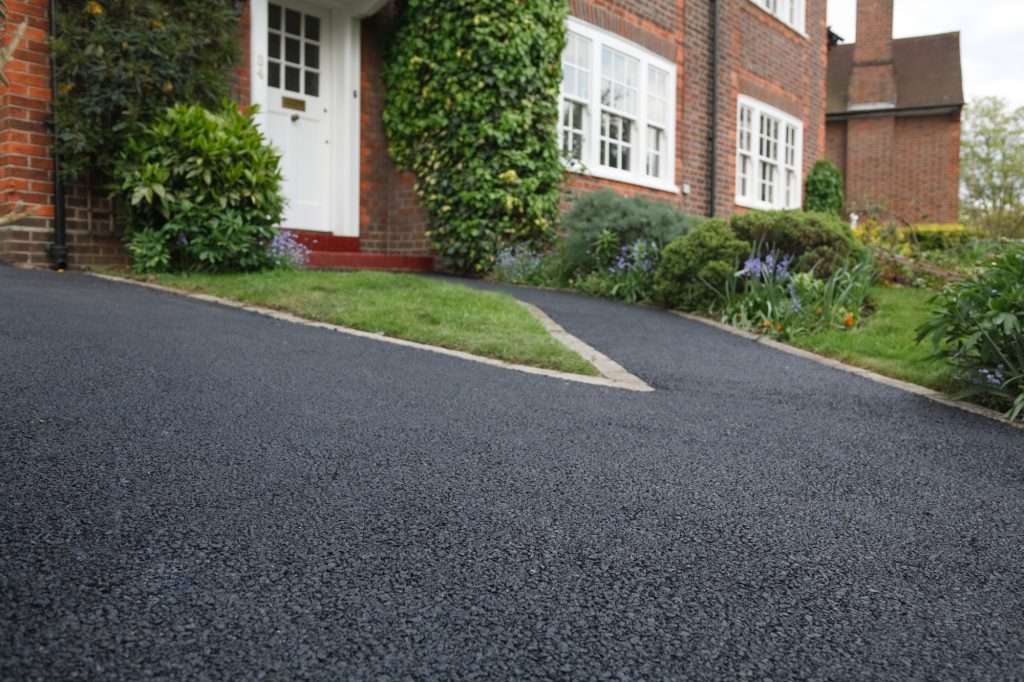
Concrete or asphalt is one of the bigger decisions in any driveway project — and one of the few where the right answer actually depends on your specific situation rather than what the contractor prefers selling. Concrete costs more up front and lasts longer. Asphalt costs less and needs more maintenance. Both can be done well or done badly. Both have climate considerations that matter more than most homeowners think.
Here’s a real homeowner’s comparison — costs, lifespans, climate realities, and the trade-offs that actually move the math. From a general contractor’s perspective.
The Short Answer
- Asphalt wins on upfront cost. Lasts 15–25 years with proper sealing. Easier to install in cool weather. Better for harsh freeze-thaw climates if maintained.
- Concrete wins on lifespan. Lasts 25–50 years. Higher upfront cost but lower total cost over time. Looks better longer. Adds more resale value.
For most Northeast homeowners staying 10+ years, concrete usually wins on total cost. For homeowners staying 5–7 years or working with a tight budget today, asphalt is the better near-term choice. The decision is rarely as simple as “which one’s better” — it’s “which one fits how long you’ll own the house and how much upfront budget you have.”
Real 2026 Cost Ranges
For a typical 600 sq ft two-car driveway:
- Asphalt (new install): $3,000 – $6,500
- Concrete (new install, broom finish): $5,500 – $11,000
- Stamped or decorative concrete: $8,500 – $16,000
- Asphalt resurfacing (over existing base): $1,800 – $3,500
- Concrete repair or partial replacement: $2,500 – $6,000 depending on scope
Cost drivers: existing surface tear-out (versus virgin install), grading and drainage prep, edge restraints, sub-base depth, and any custom finishes or color work. A simple flat driveway costs significantly less than one with curves, slope, or decorative finish.
Lifespan Reality
- Asphalt: 15–25 years with regular sealing (every 3–5 years). Lifespan drops to 10–15 without sealing.
- Concrete: 25–50 years with periodic sealing and crack repair. Some concrete driveways last 60+ years.
- Stamped or decorative concrete: 20–30 years (the texture and color shorten the practical lifespan as patterns fade or chip).
Climate matters. In severe freeze-thaw areas, asphalt’s flexibility actually works in its favor — it bends without cracking. Concrete is more rigid; without proper expansion joints and reinforcement, it cracks under repeated freeze-thaw. A well-installed concrete driveway in Northeast climate still typically outlasts asphalt; a poorly-installed one fails fast.
Maintenance Reality
Asphalt
- Seal every 3–5 years. $300–$700 per application for a typical driveway. Mandatory for the lifespan you’re paying for.
- Crack-fill every 2–3 years. Small cracks expand fast if water gets in. Cheap to fix early; expensive to fix late.
- Restripe edges and surface every 8–10 years. Or resurface for $1,800–$3,500 to extend life another 10–15 years.
Concrete
- Seal every 5–7 years. $400–$900 per application. Less frequent than asphalt but more expensive per application.
- Joint maintenance. Expansion joints and control joints need occasional caulking to prevent water intrusion.
- Crack repair as needed. Hairline cracks are normal and don’t need repair. Anything wider than ¼ inch needs filling.
- Salt stain treatment. Road salt and ice melt stain concrete over time. Periodic cleaning preserves appearance.
Total maintenance cost over a 25-year window: asphalt typically runs $4,000–$7,000 in maintenance. Concrete typically runs $2,000–$4,000. The maintenance gap partially offsets concrete’s higher install cost.
Climate and Weather Match
Northeast (NJ, NY metro, New England)
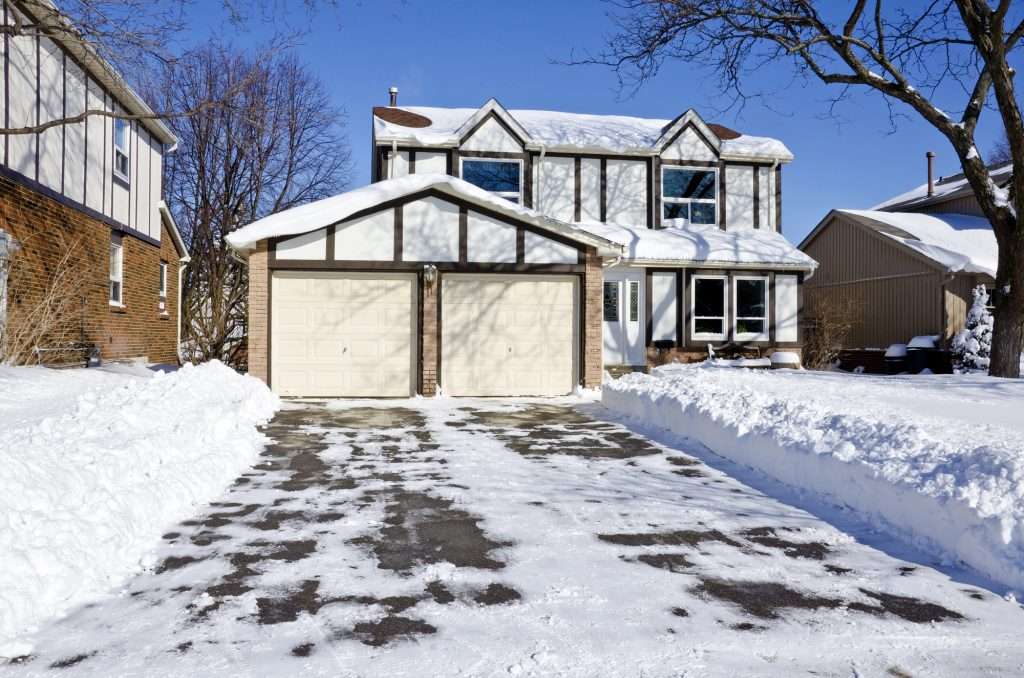
Freeze-thaw is the big variable. Concrete needs proper installation — adequate sub-base, expansion joints every 8–10 feet, and reinforcement (typically rebar or wire mesh). Done right, concrete outlasts asphalt. Done badly, concrete fails fast.
Asphalt is more forgiving of bad installation but requires the consistent sealing maintenance many homeowners skip.
Hot Climate (Southwest, Southeast)
Asphalt softens in extreme heat. In Phoenix-style 110°F summers, asphalt can deform under heavy vehicles. Concrete handles heat dramatically better in hot climates.
Mixed Climates (Mid-Atlantic, South)
Both work. Decision usually comes down to budget and aesthetic preference rather than climate constraint.
Aesthetics and Curb Appeal
- Concrete photographs better and shows better on listings. Light color, clean look, options for stamped finishes that mimic brick or stone.
- Asphalt is dark, monochromatic, utilitarian. Looks fine but doesn’t stand out.
- Stamped concrete is the high-end aesthetic option. More expensive, more impressive, more vulnerable to weather wear over time.
- Decorative concrete with color can match the home’s exterior palette. Adds material design coherence with siding and trim work — bundles well with broader exterior projects.
If you’re planning broader exterior work — like the projects covered in our posts on repainting your home exterior or when siding needs replacement — coordinating the driveway with paint and siding decisions gets you a more unified exterior result.
Resale Value
- Concrete typically adds more to resale value than asphalt. Buyers see concrete as “newer” and “premium.”
- Asphalt is neutral — neither adds nor subtracts much. Bad-condition asphalt actively subtracts.
- Stamped or colored concrete can add real resale value, especially in higher-end markets where curb appeal influences pricing.
- Worn or cracked driveways of any material are a real negative on home inspections. Buyers see them as deferred maintenance.
If you’re planning to sell in 1–2 years, the resale ROI on a new driveway is usually 40–60% of install cost. If you’re staying long-term, the math is about which surface fits your life and budget.
When to Repair vs Replace
- Asphalt: Resurfacing (overlaying new asphalt on existing base) buys 10–15 years for $1,800–$3,500. Worth it if the sub-base is sound. Full replacement needed if the base is compromised or there’s drainage failure underneath.
- Concrete: Crack repair and joint caulking buy years of additional life if structural integrity is fine. Full replacement needed if there’s heave, settling, or widespread cracking.
- Either material: If the surface looks bad and you’re listing the house in the next year, repair is usually the right call. Full replacement makes sense if you’re staying long-term.
Installation Best Practices
A driveway is only as good as the base it sits on. Watch for these in any contractor proposal:
- 6–8 inches of compacted gravel base minimum
- 2.5–3 inches of asphalt thickness for residential driveways
- Proper edge restraints to prevent crumbling
- Compaction with a steel-wheel roller
- Sealing after 6–12 months (not immediately — new asphalt needs to cure)
- 4–6 inches of compacted gravel base
- 4-inch concrete thickness minimum for residential (6 inches for heavy vehicles)
- Wire mesh or rebar reinforcement throughout
- Control joints cut every 8–10 feet to direct cracking
- Expansion joints at the garage, sidewalk, and any abutting structures
- Proper curing — typically 7 days minimum before vehicle use
Cutting corners on the base or skipping reinforcement is where bad installs come from. A driveway that fails at 8 years instead of 25 years is almost always traced back to inadequate prep work.
When to Bundle With Other Projects
The most cost-effective time to install or replace a driveway is during broader exterior work. Mobilization, site protection, and project management get shared, and the finished result is more coordinated.
- Driveway + roof replacement: Tear-off debris falls into the driveway anyway. Replace after the roof.
- Driveway + siding or paint: Coordinate the work so the driveway gets done last — it doesn’t get walked on by siding or paint crews.
- Driveway + gutter work: Gutters and downspouts often dump water onto the driveway. Replacing both together lets you design proper drainage paths — the EPA’s Soak Up the Rain program covers why managing stormwater away from impermeable surfaces matters for both your foundation and the broader watershed.
- Driveway + walkways/patio: Same material, same crew, much lower per-square-foot cost when done together.
For broader exterior planning, our home remodeling services coordinate the integrated exterior project across roofing, siding, paint, and paving cycles.
Red Flags in a Driveway Bid
- Quote based on a phone call. Real driveway quotes require a site visit to measure, assess grading, and check existing sub-base.
- Lowest bid by a wide margin. Usually a sign of thin asphalt, skipped base prep, or missing reinforcement.
- No discussion of sub-base. What’s underneath matters more than what’s on top.
- No itemized breakdown. Tear-out, base prep, material, labor, joints, sealing should all be itemized.
- Door-to-door sales urgency. “We have leftover material from a nearby job — special discount if you sign today” is the classic driveway scam template.
- Cash-only or large upfront deposits. Standard is 25–35% deposit, milestone payments, final on completion and inspection.
- No written warranty. Material warranties (1–10 years on workmanship; sealants longer) should be in writing.
Ready for a Real Driveway Quote?
If you’re planning a driveway project — new install, full replacement, or repair-vs-replace decision — we’d be happy to walk through the property, look at the existing sub-base, and put together a real scope. Our concrete and paving services cover residential driveways, walkways, patios, and broader paving projects, and our portfolio shows examples of work we’ve completed.