
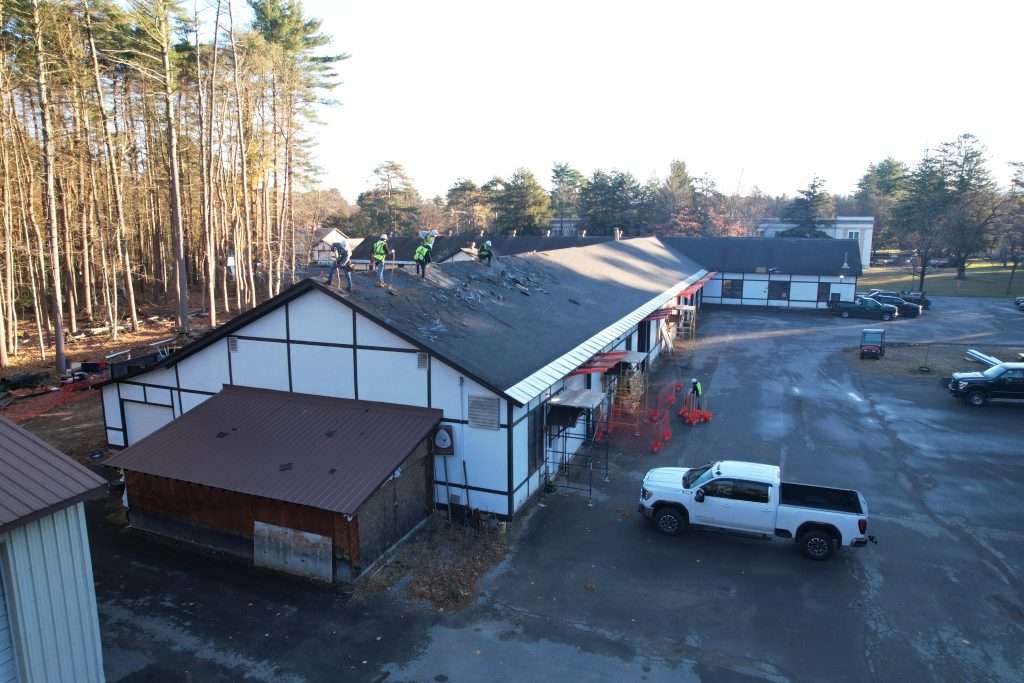
A commercial roof rarely fails politely. It fails in the middle of a thunderstorm, during a holiday weekend, with tenants inside and water dripping onto inventory. By the time the problem demands attention, the cost has tripled and the options have shrunk.
The thing that separates a $40,000 planned replacement from a $90,000+ emergency one is the months of lead time. Here’s how to recognize when a commercial roof is approaching the end of its life — and why summer is the right window to plan a replacement, from a general contractor’s perspective.
The Emergency Cost Premium Is Real
An emergency commercial roof replacement costs significantly more than a planned one. Reasons compound:
- Premium scheduling. A crew dropping a planned job to respond to your roof tear-off costs extra — and that’s before overtime.
- Limited material options. Whatever’s in the supplier’s warehouse is what goes on the roof. The roofing membrane, insulation R-value, and warranty class you would have specced under normal planning are off the table.
- Water damage cleanup. Once water gets through, the damage isn’t limited to the roof. Insulation, drywall, ceiling tile, electrical, inventory — all collateral.
- Business interruption. Tenants displaced, retail closed, operations halted. The lost revenue compounds the direct cost.
- Insurance complications. Many policies cover sudden damage but not failure from neglect. An emergency replacement after years of unaddressed wear sometimes doesn’t get covered at all.
A planned replacement, scheduled 6+ months in advance, lets you spec the right materials, negotiate competitive bids, schedule around tenant operations, and execute during good weather. The cost difference often pays for half the project.
Realistic Lifespans by Commercial Roof Type
- TPO (thermoplastic polyolefin) single-ply: 20–30 years. The most common modern flat-roof system.
- EPDM (rubber) single-ply: 25–30 years. Older system, still common.
- PVC single-ply: 20–30 years. Premium chemical resistance, popular for restaurants and industrial.
- Modified bitumen: 20 years. Asphalt-based, common on older commercial buildings.
- Built-up roofing (BUR — tar and gravel): 15–30 years depending on number of plies.
- Standing-seam metal: 40–60+ years.
- Spray polyurethane foam (SPF): 15–20 years with recoating; longer with maintenance.
If you don’t know your roof’s type or age, check the building’s capital improvement records or the original construction documents. If those don’t exist, a professional inspection will identify the system and estimate remaining life within reasonable bounds.
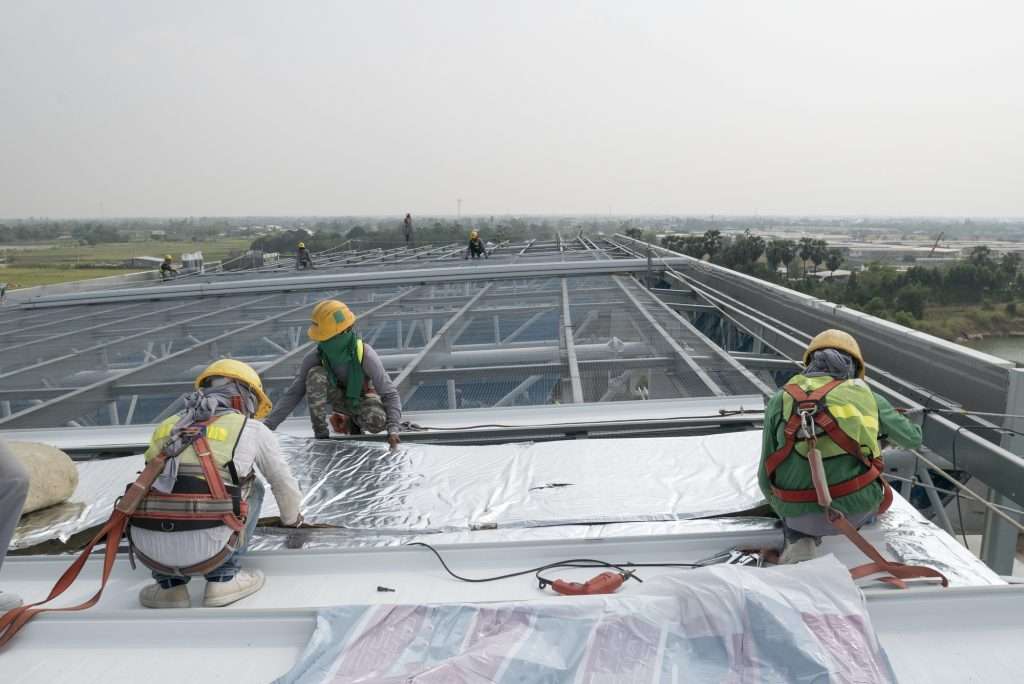
Signs a Commercial Roof Needs Replacement
Many of the same signs apply across residential and commercial — our earlier post on 5 signs your roof needs replacement covers the residential parallel. The commercial-specific signals:
1\. Ponding Water That Doesn’t Drain Within 48 Hours
Flat commercial roofs are supposed to slope (slightly) toward drains. Standing water 48+ hours after rain points to drainage failure, insulation compression, or structural sag. All three are roof-replacement territory.
2\. Membrane Splitting, Blistering, or Seam Failure
Single-ply membranes fail at the seams first. Visible splits, lifting edges, blistering, or any seam separation is a clear end-of-life signal. Patching seams buys months; it doesn’t buy years.
3\. Repeated Leaks in the Same Area
One leak is a repair. Three leaks in 18 months in the same general area is a system that’s failing structurally — typically wet insulation that won’t dry out. Patching the surface ignores the bigger problem.
4\. Visible Insulation Through the Membrane
If you can see the insulation board pattern showing through the surface membrane (wavy lines, visible joints), the cover is degraded and approaching failure. End-stage signal.
5\. Interior Damage Spreading
Ceiling tile staining moving across floors. New cracks in drywall under the roof. Mold appearing in HVAC ducts. These all suggest moisture is getting past the roof and migrating through the building structure. Replacement is past due.
Why Planning Ahead Saves the Bill
Competitive Bidding
Three real bids from qualified vendors typically produce a 15–25% cost spread. Emergency replacement skips bidding entirely.
Material Selection
Planned replacement lets you upgrade. White or reflective TPO can drop AC costs significantly in the Northeast summer (the equivalent of a cool roof on the residential side). Better insulation R-value cuts long-term operating costs. Premium warranty class (typically 15- vs 20- vs 25-year) is also a planning choice.
Scheduling Around Operations
Retail tenants closed for an emergency reroof lose revenue. Office tenants displaced add building-management costs. Industrial operations halted compound the problem. A planned replacement happens during low-tenant windows, after-hours when possible, with clear notification to all stakeholders.
Insurance Position
Most commercial insurance policies distinguish between sudden damage (covered) and gradual failure from neglect (often not covered). A documented planned replacement keeps your insurance posture clean.
Why Summer Is the Right Window
For Northeast commercial roofs, May through October is the ideal replacement window. Reasons:
- Most commercial roofing membranes need dry weather and temperatures above 40°F to install correctly. TPO and PVC welding, EPDM adhesives, and asphalt-based systems all have temperature minimums.
- Predictable dry windows. Summer has more multi-day dry stretches than spring or fall. Mid-project rain on an exposed deck creates major water damage.
- Daylight hours. Crews get more productive time per day. A 12-hour summer workday means 50% more productivity than a 7-hour December day.
- Tenant impact predictability. Summer typically has lighter retail traffic in many sectors (school year off-cycle, vacation season). Easier to coordinate.
The flip side: summer is also the busiest commercial roofing season. Lead times for material orders run 4–8 weeks in peak. Books fill up. If you’re planning a 2026 commercial roof replacement, ideally the planning conversations happen now — not in September when the window’s closing.
Bundling With Other Commercial Exterior Work
The most cost-effective time to do a commercial roof replacement is during a broader exterior maintenance cycle. If your parking lot needs concrete paving work, your masonry needs repair or repointing, or you’re already planning seasonal exterior repainting, packaging the roof with those projects significantly reduces per-project overhead — single mobilization, shared crew time, consolidated permitting, and one project manager running the whole exterior cycle.
For property managers running multi-building portfolios, the bundling math is bigger. A coordinated summer cycle across multiple buildings — roofs, parking lots, masonry, paint — runs cheaper than handling each property separately. Same logic that drove our earlier post on replacing gutters when you replace your roof applies at the commercial scale.
What to Look For in a Commercial Roofing Vendor
- Manufacturer certifications. Real installers carry manufacturer-specific certifications (GAF, Carlisle, Firestone, JM, etc.). The certs determine the warranty class you can get on the finished roof.
- OSHA compliance documentation. Commercial roof work has serious fall-protection requirements — the OSHA Safety and Health Topics: Roofing resources cover the baseline. Vendors should have documented safety programs and OSHA-compliant crews.
- Insurance. $2M general liability minimum, $5M+ umbrella for larger commercial work, workers’ comp documented.
- References from comparable projects. Office building roofs are different from warehouse roofs are different from restaurant roofs. Ask for references on projects similar to yours.
- Tear-off process and disposal plan. A vendor who can’t explain how the old roof comes off and where it goes is one that hasn’t planned the project.
- Warranty terms in writing. Both material and workmanship. Commercial roofing warranties run 10–30 years depending on the system and class.
- Detailed bid documentation. Itemized cost breakdown, square-foot pricing, contingency line, payment schedule. Vague bids are where surprise costs come from.
Ready to Plan a Real Commercial Roof Project?
If you’re managing a commercial property and the roof is approaching end-of-life — or you just want a real assessment of where it stands and how long you’ve got — we’d be happy to walk through it. Our commercial roofing service covers full replacements, scheduled planning, and the bundled exterior cycles property managers actually need. Our portfolio shows examples of commercial work we’ve handled.