
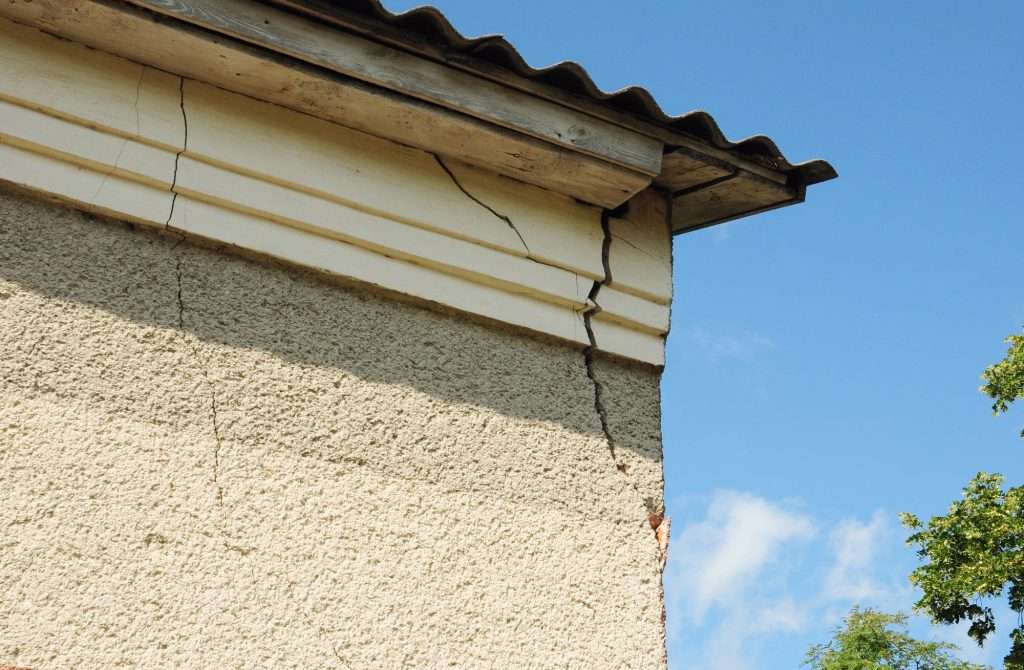
Gutters take the second-biggest storm hit after roofs. When a bad system rolls through Bergen County — a summer squall, a coastal remnant tracking north, a nor’easter tail — gutters catch wind-driven debris, torn shingles, tree limbs, and hail. They sag. They tear away from fascia. They fill with roof granules. They stop moving water where it needs to go. And unlike a torn shingle you can see from the driveway, gutter damage often shows up first as water damage to your foundation, siding, or basement weeks later.
Here’s the real homeowner’s action guide for the first 48 hours after gutter storm damage across Bergen County — Hackensack, Paramus, Fair Lawn, Ridgewood, Teaneck, Fort Lee, Englewood, Bergenfield, and every town in between. From a licensed local general contractor that handles gutter, roofing, and siding storm response across Bergen.
This post pairs with our companion guide on roof storm damage in the first 48 hours — bad storms rarely damage only one system. If you’re reading this after a storm hit your home, work through both.
Safety First — Before You Inspect
Gutter inspection after a storm has its own hazards separate from roof work.
- Stay off the ladder. Wet gutters, wet siding, wet ground, and storm-loosened mounting hardware are a fall hazard. Ground-level inspection first.
- Watch for hanging gutters. A gutter partially torn from the fascia can drop suddenly. Don’t stand directly under a visibly compromised gutter.
- Downed power lines near the property. Metal gutters can conduct current from nearby downed lines. Stay clear until utility company clears the area.
- Watch for hidden water damage indoors. Basement moisture, wet ceiling corners, damp walls near the foundation — these can precede foundation issues.
- Don’t try to reattach gutters yourself. Storm-damaged fascia may look intact but be compromised. A ladder against loose fascia is a real fall risk.
Hours 0–4: The Ground-Level Gutter Inspection
Once it’s safe to be outside, walk the property perimeter and document what you can see from the ground. Everything visible from the ground counts as first-pass evidence for insurance.
- Look at each gutter run from below. Sags, gaps between sections, gutters pulled away from the fascia, and torn-away sections are all visible from the ground.
- Check the downspouts. Bent, crushed, detached, or dislodged downspouts indicate significant storm impact. Downspouts torn away from splash blocks are a real concern for foundation drainage.
- Look at the ground below each gutter. Roof granules, shingle pieces, and gutter debris on the ground below indicate the gutter caught significant roof material. Gutter sections on the ground are self-explanatory.
- Photograph everything. Wide shots of each side of the house. Close-ups of any visible gutter damage, torn fascia, or damaged downspouts. Timestamp is added automatically by most phones.
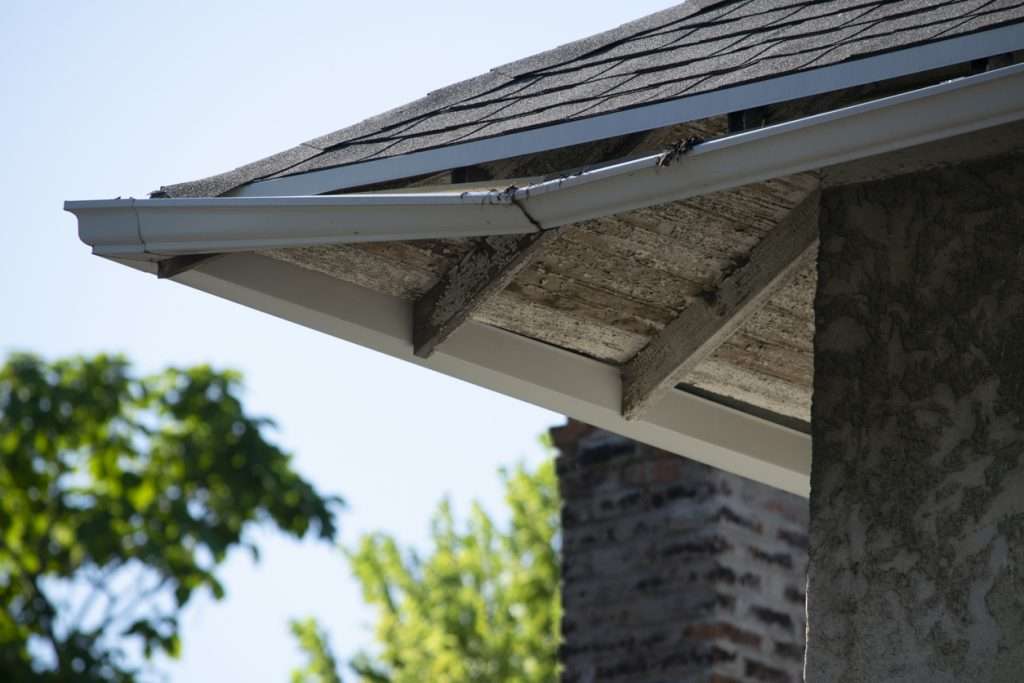
- Check the fascia and soffit. Damaged gutters often mean damaged fascia (the board the gutter attaches to). Loose fascia is a real problem — it’s often the reason the gutter came away.
- Check the foundation and basement. Water in the basement or standing water near the foundation right after a storm points to gutter or downspout failure directing water to the wrong place.
Save every photo. Insurance claims turn on documentation from the moment of loss.
Hours 4–12: Notify Insurance and Prevent Secondary Damage
Report the loss to your homeowner’s insurance company right after documentation is complete. Policies typically require prompt notification.
- Have your policy number ready.
- Report the date and time of the storm. The NOAA New York area weather forecast office covers Bergen County and maintains storm records that support gutter and roof damage claims.
- Describe the gutter damage specifically. Note if roof or siding also took damage — most insurance claims bundle roofing, gutters, and siding as “exterior damage” from a single storm event.
- Ask about your deductible. Some Bergen County policies have separate wind/hail deductibles that apply differently to gutters versus roof.
- Get a claim number. Every subsequent communication references it.
- Ask about temporary protection allowances. Insurance often reimburses temporary protection to prevent secondary water damage.
Damaged gutters cause fast secondary damage. Water no longer routed away from the foundation can enter the basement within a single rain event. If a storm damaged the gutter and another storm is forecasted before repair, the secondary damage window is narrow.
Hours 12–24: Temporary Water Diversion
If your gutter is compromised and rain is in the forecast, temporary water diversion can prevent foundation damage until permanent repair. This is a professional job — not a homeowner DIY.
- Temporary downspout extensions. Where downspouts are damaged or dislodged, temporary extensions route water away from the foundation.
- Emergency gutter tarping. Where a gutter section is torn away, a professional can install temporary diversion to prevent water from cascading directly onto siding or into the basement.
- Sandbagging around the foundation. Where foundation exposure to storm water is imminent, sandbags provide temporary protection.
- Do NOT accept storm-chaser “quick fix” quotes. Same storm-chaser dynamic that affects roofing — contractors from out of state show up in Bergen after big storms offering fast, cheap repairs. Many disappear before permanent work.
- Verify the licensed local contractor before signing anything. New Jersey home improvement contractor license. Real business address. Real insurance certificate. Real reviews from local jobs.
Our post on replacing gutters when you replace the roof covers the underlying scope for permanent gutter work — worth reading before hiring anyone.
Hours 24–48: Get Real Estimates
Once temporary protection is in place, start the estimate process for permanent repair or replacement.
- Get 2–3 estimates from licensed local contractors. Not the guy who knocked on your door offering a quick fix.
- Get roofing, gutters, and siding estimated together if all three are damaged. Bundling matters — a single contractor handling all three services is easier to coordinate with insurance and easier to warranty afterward. See our companion posts on roof storm damage and when siding needs replacement.
- Verify the NJ home improvement contractor (HIC) license. Verify at the NJ Division of Consumer Affairs before signing anything.
- Verify insurance. Real general liability, workers’ comp, and gutter-installation-specific coverage. Request a certificate of insurance with your name and address listed as certificate holder.
- Verify local addresses and phone numbers. Storm-chasing operations often list out-of-state addresses or virtual numbers.
- Get the estimate in writing. Scope of work, materials, timeline, warranty, price. Verbal quotes are useless.
- Do NOT sign an Assignment of Benefits. This transfers your insurance claim rights to the contractor. It’s a red flag for legitimate NJ contractors.
Bundling Gutter Repair with Roof and Siding
Big storms almost never damage only gutters. If your gutter took storm damage, the roof and siding above and around it likely did too. Bundling matters:
- Roof damage above the gutter. Torn shingles, damaged flashing, or compromised roof deck — all of this affects gutter performance even after gutter replacement.
- Fascia and soffit damage. The board the gutter mounts to. Damaged fascia means the new gutter has nothing to attach to properly.
- Siding damage adjacent to the gutter. Siding around gutter attachment points and downspout runs is often damaged in the same storm.
- One contractor, one warranty, one insurance conversation. Bundling roofing, gutter, and siding damage into one project has real advantages — coordination, scheduling, cost, and warranty coverage.
For material and system decisions on the roofing side, our post on metal vs. asphalt shingles covers the material tradeoffs. For the siding side, our post on when siding needs replacement walks through the diagnostic.
The Bergen County Storm-Chaser Warning (Same as Roofing)
Storm-chaser contractors work gutters, roofs, and siding equally hard. The same red flags apply:
- Door-knocking within 24 hours of a storm is a red flag. Real licensed Bergen contractors don’t cold-canvass.
- “We’ll inspect your gutters for free” is a red flag. Legitimate assessments don’t start with a free service pitch.
- Out-of-state license plates, addresses, and phone numbers are red flags.
- Pressure to sign immediately is a red flag.
- Requesting full payment up front is a red flag.
- Assignment of Benefits paperwork is a red flag.
Bergen County residents can verify contractor credentials and complaints through the NJ Division of Consumer Affairs. The Bergen County government website provides local resources and consumer protection contacts.
What Insurance Typically Covers on Gutters
Typically Covered
- Wind damage from a documented storm event (torn, sagging, or detached gutters)
- Impact damage from windborne debris (falling tree limbs, roof material)
- Fallen tree damage to gutters
- Secondary water damage inside the home if directly caused by gutter failure during a covered event
- Damaged downspouts from the same storm event
- Damaged fascia when documented as part of the gutter damage
Typically NOT Covered
- Gradual wear on old gutters
- Damage from missed maintenance (clogged gutters that overflow don’t count as storm damage)
- Foundation damage from long-term gutter drainage issues (not sudden storm-related)
- Rust or corrosion from age
- Basement water damage where the primary cause is a compromised foundation or waterproofing failure, not storm-caused gutter failure
Every policy is different. Read yours or ask your agent. Bergen County storm gutter claims often turn on whether the damage is documented as storm-caused versus wear.
The 48-Hour Gutter Checklist
- ☐ Safety check complete. No downed lines, no imminent structural issues, no active water intrusion.
- ☐ Ground-level gutter inspection photographed and documented.
- ☐ Downspouts and splash blocks checked.
- ☐ Interior water damage checked (basement, ceilings, walls near foundation).
- ☐ Fascia condition noted.
- ☐ Insurance company notified. Claim number in hand.
- ☐ Temporary water diversion in place if rain is forecasted.
- ☐ Storm-chasers refused. Door-knockers turned away.
- ☐ Licensed local contractor contacted for permanent estimate.
- ☐ 2–3 written estimates in process for permanent repair.
- ☐ HIC license and insurance verified for each estimate.
- ☐ Bundled roofing/gutter/siding estimate if multiple systems damaged.
Local Bergen County Gutter Storm Response
If your Bergen County home took gutter storm damage — sagging gutters, torn-away sections, damaged downspouts, or compromised fascia — Nuvista handles gutter storm response across the county. We’re a licensed New Jersey general contractor with real insurance, a real Bergen-area presence, and experience running the full storm-damage claim process alongside residential roofing, gutter, and siding work. We handle gutter installation and replacement, residential roofing, and siding installation as a bundled scope when the storm hits all three.
If you need a real inspection, a written estimate, or help thinking through the insurance claim process, request a free estimate — we’ll walk the property, put together a written scope, and give you the honest read on what the storm actually did.